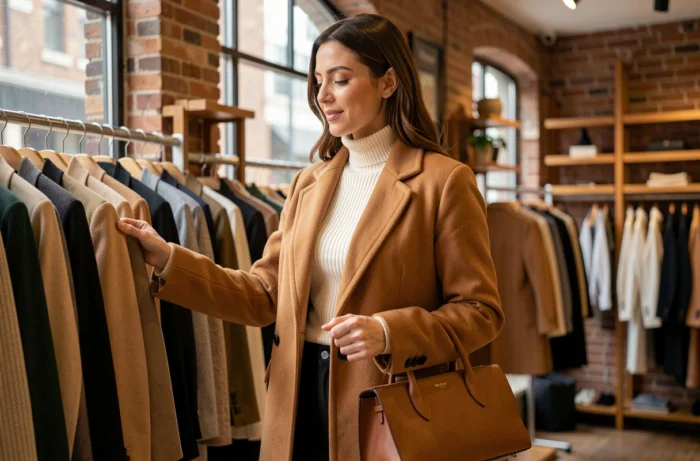
The autumn-winter 2026 fashion shows have delivered their directions, but the context in which these fashion trends arrive in stores has changed. Since July 19, 2026, the European regulation ESPR prohibits large companies from destroying their unsold textiles. Collections are tightening, residual stocks are feeding the second-hand circuit, and disposable micro-trends are losing ground. Understanding what is in style this season also requires measuring what now structures the offer.
ESPR Regulation and Environmental Labeling: What Changes for Style This Season
The ESPR regulation (Ecodesign for Sustainable Products Regulation) does not only concern manufacturers. It directly modifies what consumers find on the shelves. Brands that can no longer destroy their unsold items are streamlining their ranges: fewer references, more targeted restocks, and pieces designed to last several seasons.
At the same time, France is preparing for mandatory environmental labeling on textile products, expected in October 2026. This score, visible on the label, will inform about the ecological impact of the garment. Recyclable materials and repairable constructions are therefore gaining visibility in current collections.
For buyers, the consequence is concrete: durable and versatile pieces are taking precedence over impulsive purchases. Discount, outlet, and refurbished circuits are becoming common channels for accessing past collections, which expands choice without pushing for overconsumption. By following fashion trends on Point Contre Point, one can measure how this regulatory shift is reshaping wardrobes.
The French anti-ultra-fast-fashion law, whose penalties came into effect on September 1, 2026, adds an additional layer. Low-cost platforms see their products taxed with an environmental penalty, which partially balances the price gap with more virtuous brands.
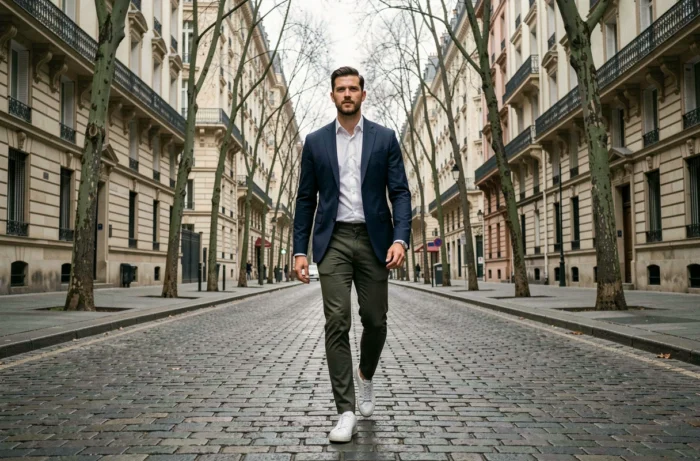
Autumn-Winter 2026 Colors: Burgundy, Green, and Chocolate Tones
The season’s palette moves away from uniform beiges. Burgundy emerges as the standout color, ranging from structured blazers to fine knits. Competitors have all noted it, but the key point is its association with two other shades that structure the looks: anise green (worn as an accent on an accessory or top) and sky blue, which is more unexpected for autumn.
Chocolate, ecru, and khaki replace classic neutrals. These warm tones work in monochrome, simplifying outfit construction without multiplying pieces. A chocolate pair of pants paired with an ecru sweater and a khaki jacket forms a cohesive ensemble without the effort of coordination.
The choice of saturated colors rather than pastels also relates to the production context: bright dyes on natural materials (wool, thick cotton) age better than light colors on fine synthetics. Brands that focus on sustainability naturally steer their ranges towards these deep tones.
Key Wardrobe Pieces: Blazer, Straight Jeans, and Oversized Knitwear
Three categories of clothing are capturing attention this season. Rather than listing ten pieces, it is better to understand why these work together.
- The structured blazer, worn in burgundy or chocolate, serves as a pivot. It dresses up jeans as well as a midi skirt, and its cut allows for transitioning from the office to an outing without changing jackets.
- The straight or barrel jeans replace skinny jeans in most wardrobes. Its looser cut offers better comfort and pairs well with flat ankle boots as well as loafers, another strong piece of the season.
- Oversized knitwear (thick sweaters or cardigans) adds volume to the upper body, balancing silhouettes worn with fitted bottoms. Mixed wool versions meet the repairability criteria pushed by the regulatory framework.
The men’s wardrobe continues to make its way into women’s closets. Wide-collared shirts, pleated trousers, and straight trench coats are offered in fitted cuts that maintain masculine codes without sacrificing drape.
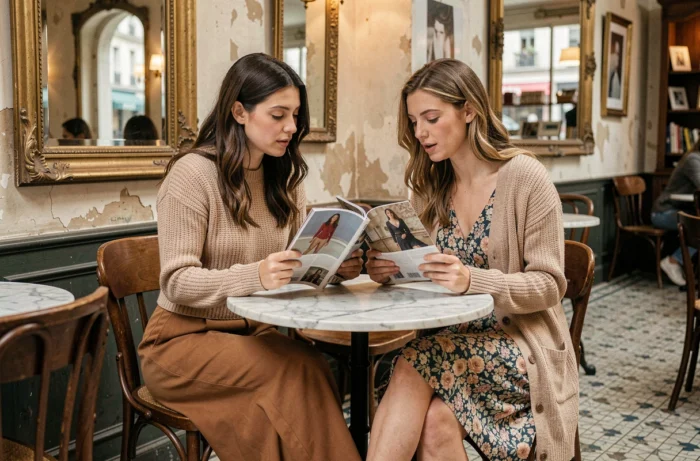
Materials and Textile Construction: Leather, Wool, and Recycled Fibers Through the Lens of Ecodesign
Leather remains omnipresent, but its origin and treatment are now part of the sales pitch. Brands increasingly display the source of their hides and the tanning processes used. The environmental labeling expected in October 2026 will make this information systematic for the French market.
Wool is making a strong comeback, driven by the search for thermoregulating and durable materials. Wool-cashmere and wool-alpaca blends dominate sweaters and coats. Recycled fibers (recycled polyester, regenerated cotton) are gaining ground in linings and technical pieces, although field reports diverge on their actual durability after several washes.
For everyday style, the key criterion to remember is the fabric density. A wool coat with sufficiently dense weight will last through several winters. A fine polyester blazer, even trendy, will lose its shape after one season. Prioritizing construction quality over the quantity of pieces remains the most cost-effective advice, especially since resale circuits facilitate wardrobe rotation without waste.
Building an Autumn 2026 Look Without Overaccumulating
The underlying trend is not a particular garment but a wardrobe logic. With tighter collections and easier access to second-hand pieces, the style of the season is built around a few clear axes:
- Two to three base colors (chocolate, burgundy, ecru) that combine smoothly.
- A blazer and a coat in dense material as the framework, complemented by interchangeable knits and shirts.
- A straight jean or fluid trousers that work with all tops.
Access to resale platforms and outlets, fueled by stocks that brands can no longer destroy, expands choice without pushing for systematic new purchases. The style of this 2026 back-to-school season is defined less by a standout piece than by the coherence of a wardrobe designed to last beyond a single season.