
The market share of 100% electric cars in France crossed a symbolic threshold of around one third of new registrations by mid-2026. This shift in the energy mix profoundly alters the usual frameworks of analysis: taxation, residual value, cost of use, charging network. Following automotive news today means first understanding the regulatory and technical mechanisms that are reshaping the supply.
European Battery Passport: traceability that will impact the used electric vehicle market
The Regulation (EU) 2023/1542 on batteries mandates a mandatory digital battery passport for all electric vehicle batteries placed on the EU market from February 18, 2027. Starting in 2026, a display of the carbon performance class will be required on EV batteries, accompanied by sustainability obligations and labeling that came into effect in 2024.
This passport will change the game for the used market. Each battery will have a verifiable history: charge cycles, state of health, origin of materials. We are already observing that buyers of used electric vehicles struggle to assess the actual residual capacity of a pack. The Battery Passport fills this gap by providing standardized and enforceable data.
For those following automotive news from an asset perspective, the residual value of an electric vehicle will directly depend on the class of its battery. A model with a battery pack that shows a favorable carbon performance class will retain its value better than a less-rated competitor. This information, currently scattered or nonexistent, will become a selection criterion as clear as mileage.
We recommend that buyers of new vehicles check now if the manufacturer anticipates compliance, as finding information from Le Blog Auto Mag allows tracking these developments model by model.
CEE Reform on light commercial vehicles: a price gap between European production and imports
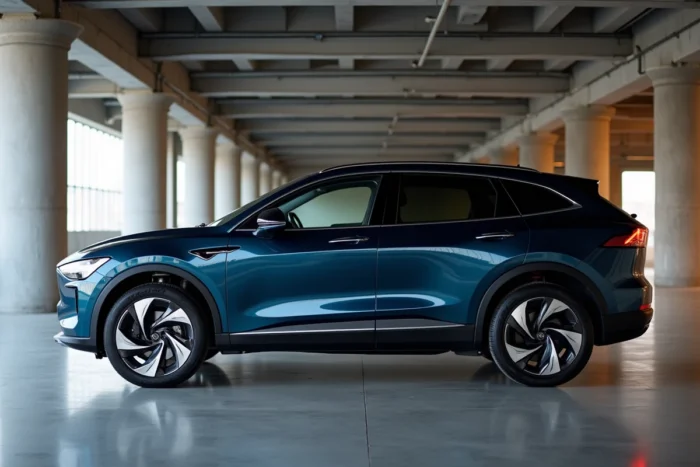
Since June 1, 2026, a reform of Energy Savings Certificates applied to light commercial vehicles reserves bonuses (multiplicative coefficients) for vehicles assembled in the European Economic Area. The amounts are adjusted according to the weight of the vehicle.
In practical terms, an electric utility vehicle produced in Europe benefits from a higher subsidy than an imported model from China with equivalent specifications. The purchase aid gap between a European utility vehicle and an imported model becomes a real financial parameter, not just an administrative nuance. For a fleet of ten vehicles, the cumulative difference can influence a tender.
This protectionist mechanism adds to the additional customs duties on Chinese electric vehicles. Professionals renewing their utility fleet must factor in this double layer of extra cost for non-European models. Chinese brands that assemble locally (Leapmotor via Stellantis in Zaragoza, for example) could, however, capture these bonuses, reshaping the competitive landscape.
New mandatory safety equipment since July 2026: impact on catalog prices
Since July 7, 2026, new driver assistance equipment has become mandatory on all new vehicles sold in Europe. This regulatory step, often drowned out in announcements of models and tests, has a direct consequence on catalog prices.
Manufacturers are passing on the cost of these systems to the base price. In entry-level segments (city cars, small SUVs), the effect is proportionally more pronounced than in premium sedans where these features already existed as standard. We observe that several popular models have seen their entry price reevaluated between the first and second half of 2026.
- The adaptation concerns all new models, including end-of-series still in stock at dealerships if their first registration date falls after the entry into force
- Used vehicles registered before July 2026 are not affected, creating a disparity in equipment between two examples of the same model
- Manufacturers who already integrated these systems as standard (often German and Swedish brands) have not adjusted their prices, which temporarily alters the price gaps between competing segments
Comparing two competing models without checking their homologation date no longer makes sense since this reform. A test published in early 2026 may concern a version lacking equipment that is now mandatory, thus on a vehicle that no longer exists in the catalog.
Euro 7 standard and plug-in hybrids: what traditional tests do not measure
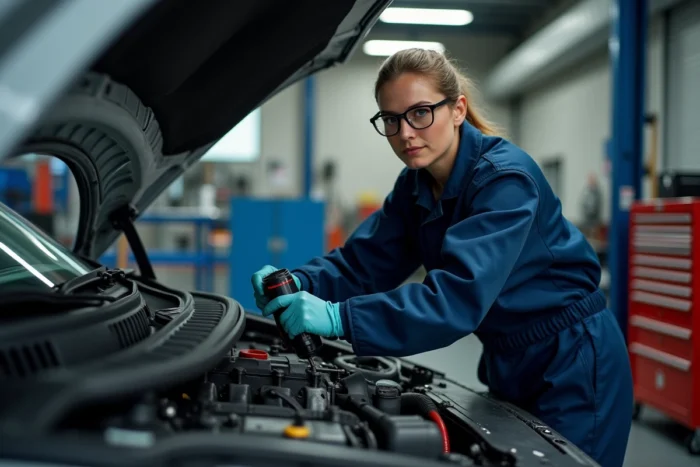
The gradual implementation of the Euro 7 standard starting at the end of 2026 tightens the fine particle emission thresholds (including braking and tires) and introduces requirements for the durability of pollution control systems. For plug-in hybrids, the consequence is technical: the WLTP cycle overestimates the actual electric range of most PHEV SUVs.
Real-world tests conducted on open roads show significant discrepancies between the advertised electric range and that measured under real conditions, particularly on highways and in cold weather. WLTP certification remains the administrative reference, but it does not reflect the daily use of a driver who alternates between suburban trips and long highway journeys.
Before purchasing a plug-in hybrid, three criteria deserve concrete verification:
- The actual usable capacity of the battery (not the gross capacity) and its consistency with the home-work commute
- The thermal consumption measured with an empty battery, which reveals the vehicle’s behavior once the electric range is exhausted
- The model’s compatibility with future traffic restrictions in ZFE, which could evolve according to the Crit’Air classification and Euro 7 thresholds
A PHEV whose battery depletes after twenty real kilometers effectively operates like a classic hybrid burdened by a pack of cells. The additional cost at purchase is only justified if the daily commute remains within the electric envelope.
The automotive news of 2026 is read as much in regulatory texts as in circuit tests. Battery Passport, CEE reform, mandatory equipment, Euro 7 standard: each decision alters the value-for-money ratio of a new or used vehicle. Cross-referencing these parameters before a purchase remains the best protection against poor judgment.