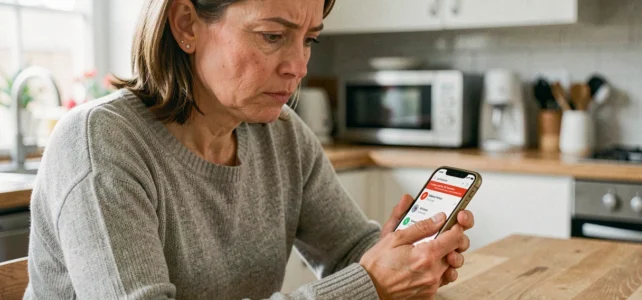
A missed call appears on your phone, accompanied by the mention “spam” or “suspected scam.” The instinct to call back to find out who tried to reach you seems logical. However, calling back a number flagged as spam exposes you to real risks, from simply calling a premium rate number to having your personal data collected by fraudulent networks.
Premium rate numbers and line validation: what happens technically when you call back
Behind a spam call often lies an automated system that dials thousands of numbers each day. The goal is not to speak with you, but to provoke a callback. By calling back, you trigger two distinct mechanisms.
The first is billing on premium rate numbers. Some numbers starting with 089 or unusual international prefixes charge several euros per minute. A simple call back of a few seconds is enough to generate a cost on your bill.
The second mechanism is the validation of your line. When you call back, you confirm that your number is active and that a real person is using it. Your number then gains value in the databases resold among spam operators. The detailed information available on the Secrets d’Hommes website illustrates this type of reporting and the precautions to take before any action.
Calling back a spam number opens the door to more unwanted calls. Your number, now confirmed as active, circulates more widely in fraudulent prospecting files.

Number spoofing: why the displayed number is not reliable
A technical element changes the game compared to what most guides on phone spam explain. Fraudsters use a technique called spoofing (caller ID spoofing). The number displayed on your screen is not necessarily that of the actual caller.
Specifically, a fraudulent network based abroad can display a classic French number starting with 06 or 07. If you call back this number, you may reach a private individual who has nothing to do with the initial call, or a voicemail. Your callback will not reveal anything about the true identity of the caller.
This mechanism makes calling back doubly unnecessary: you will not reach the source of the spam, and you risk disturbing a third party whose number has been spoofed. Community reporting databases (blocking apps, forums) identify a number as spam, but cannot guarantee that this number actually belongs to the caller.
Prior consent for telemarketing: the legal framework since August 2026
Since August 11, 2026, the regulatory framework for telemarketing has changed in France. A professional is now prohibited from contacting you by phone if you have not given your prior consent. This consent must be free, specific, informed, unambiguous, and revocable.
Registration on Bloctel is no longer necessary to be protected. The burden of proof has shifted: it is the company that must demonstrate that it has your agreement and keep this proof for three years.
This change has a direct consequence on the issue of callbacks. If you receive a commercial call without having given your consent, this call is presumed illegal. Calling back this number to ask for explanations or to demand removal from a list no longer has legal meaning: the infringement has already been established on the caller’s side.
Report rather than call back
The most effective approach is to report the number to 33700, via SMS or through the online platform. This system allows operators and authorities to trace fraudulent numbers and take action against the issuers. Reporting also feeds into the databases used by call-blocking applications.
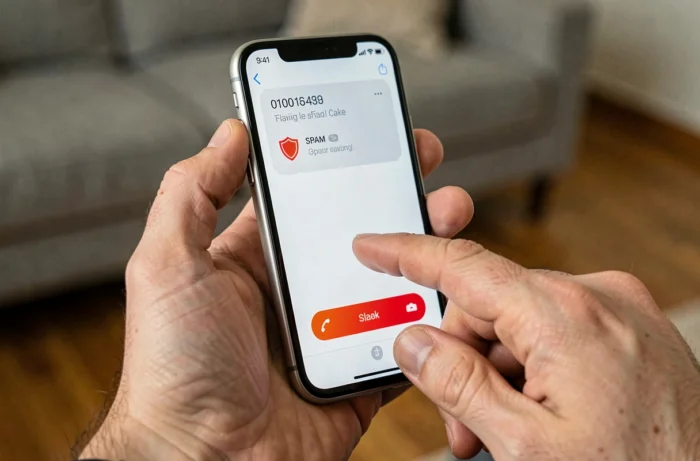
Block and filter spam calls on your phone
Rather than calling back to identify a caller, several tools allow you to address the problem upstream. The filtering systems integrated into smartphones and third-party applications have become more reliable.
- The native blocking feature on phones (iOS and Android) allows you to add a number to a blacklist in seconds after receiving the call. The blocked number will no longer be able to reach you by call or SMS.
- Specialized filtering applications cross-reference community reports to automatically identify suspicious numbers and display a warning even before you pick up.
- The “silence unknown callers” setting (available on most recent smartphones) sends any call from a number not in your contacts directly to voicemail.
These tools are not infallible, especially against spoofing, which frequently changes the calling number. The combination of several methods (manual blocking, filtering app, reporting to 33700) remains the most comprehensive protection strategy.
When a missed call deserves your attention
Not all calls reported as spam are fraudulent. A legitimate professional number may be mistakenly flagged by users. If you are expecting a call from a healthcare professional, a delivery person, or a customer service representative, verify the number through a reverse directory or the service provider’s website before deciding. Never call back an unknown number without prior verification.
The safest reflex when faced with a number reported as spam is to not call back. If the call is legitimate, the caller will leave a voicemail or contact you again. A fraudulent call, on the other hand, will never manifest itself in the same way twice, precisely because spoofed numbers change constantly. Blocking, reporting, and moving on protects both your bill and your personal data.