
A craftsman receives a bounced check three weeks after the due date. He hesitates between following up himself, hiring a collection agency, or letting it slide. In all three cases, the question of actual costs remains unclear. Since April 2026, new procedures change the game for recovering an unpaid invoice without unpleasant surprises on the final bill.
Simplified Collection Procedure of April 2026: What It Changes About Costs
Before this reform, recovering an uncontested commercial debt required either amicable follow-up (free but without guarantee) or a court order (long and sometimes costly in bailiff fees). The new procedure that came into effect on April 25, 2026, reverses this logic.
The justice commissioner sends a payment demand to the debtor. Without any contestation from them, a enforceable title is issued after a simple formal check by the registry. The registry fee is around 30 euros for commercial matters. Therefore, we know in advance what we are paying, without proportional fees or opaque processing costs.
This transparency is the central point. When trying to settle an unpaid invoice with Puissance Patrimoine, it is precisely this clarity of costs that makes the difference compared to the old options.
It should not be confused with the small claims collection procedure (capped at 5,000 euros, inapplicable between merchants), where all costs remain the responsibility of the creditor. On an invoice of 800 euros, the fee of the justice commissioner can absorb a significant portion of the recovered amount.

Electronic Invoicing and Integrated Payment: Reducing Unpaid Invoices Before They Occur
The gradual rollout of mandatory electronic invoicing pushes businesses to rethink their payment chain. The direct interest in unpaid invoices is often underestimated.
Payment Link Integrated into the Invoice
Electronic invoicing platforms allow for integrating a payment link via card or direct debit directly into the invoice. The client pays in two clicks, without excuses of forgotten transfers or misplaced bank details. Several invoicing software providers offer this feature without transaction fees, eliminating a common hidden cost.
Automatic Follow-Up Before and After Due Date
A preventive follow-up is scheduled a few days before the due date, followed by a graduated sequence after the deadline. This automation costs nothing more than the subscription to the invoicing software. The preventive follow-up mechanically reduces the volume of overdue invoices, because most unpaid invoices are simply forgotten, not refused.
Feedback on the exact effectiveness varies by sector, but the principle remains the same: every day gained on the follow-up timeline improves the amicable recovery rate.
Amicable Recovery versus Judicial: Comparing Real Costs in 2026
These two paths are often opposed as if one excludes the other. In practice, they complement each other, and it is the structure of costs that should guide the choice.
- Amicable follow-up (letter, call, email) generates no external costs. It works in the majority of cases when the debt is uncontested and the client is simply experiencing a cash flow delay.
- Sending a formal notice by registered mail costs a few euros. It establishes a legal benchmark that triggers late penalties and the fixed recovery compensation provided by law.
- Using the justice commissioner through the new simplified procedure (April 2026) offers a predictable cost of around 30 euros in registry fees, without a hearing or mandatory lawyer for uncontested debts.
- The classic payment order remains relevant for contested debts, but it involves higher registry fees and delays of several months.
The trap of “hidden fees” often lurks in collection agencies that charge a percentage of the recovered debt (sometimes 10 to 25% depending on the contracts). Reading the pricing grid before signing avoids the unpleasant surprise that turns a successful recovery into a losing operation.
Aged Balance and Client Account Management: The Tool Missing for Small Businesses
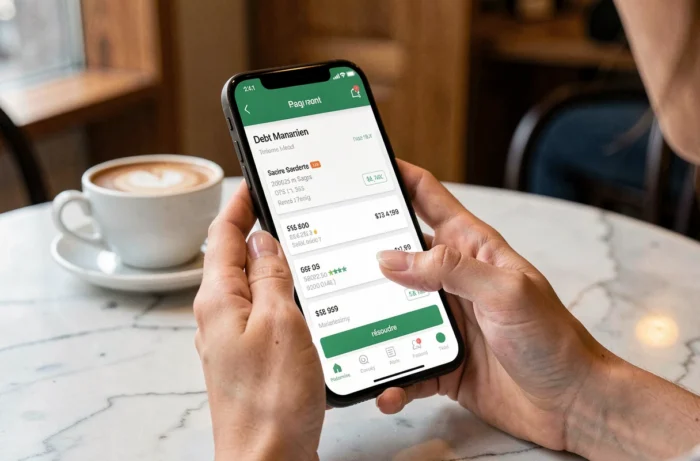
There is a lot of talk about collection, but rarely about management. The aged balance categorizes invoices by the age of delay (less than 30 days, 30-60 days, more than 60 days). It is a simple table, but most small businesses do not maintain it.
Without this tool, unpaid invoices are discovered when doing the accounts, sometimes weeks after the due date. The DSO (Days Sales Outstanding) increases without us realizing it, and cash flow gradually deteriorates.
Monitoring the aged balance weekly takes ten minutes with invoicing software. This habit allows for identifying delays from day one and triggering amicable follow-up immediately, before the situation complicates.
Companies that manage their client accounts reduce their working capital needs without resorting to factoring, a financing solution that also carries fees (factoring commission, processing fees, financing margin) rarely detailed upfront.
Recovering an unpaid invoice without hidden fees in 2026 relies on three concrete levers: using electronic invoicing to prevent delays, leveraging the new simplified recovery procedure when amicable follow-up fails, and managing client accounts with an up-to-date aged balance. The current regulatory framework provides creditors with cost-controlled tools, provided they know them before they are needed.