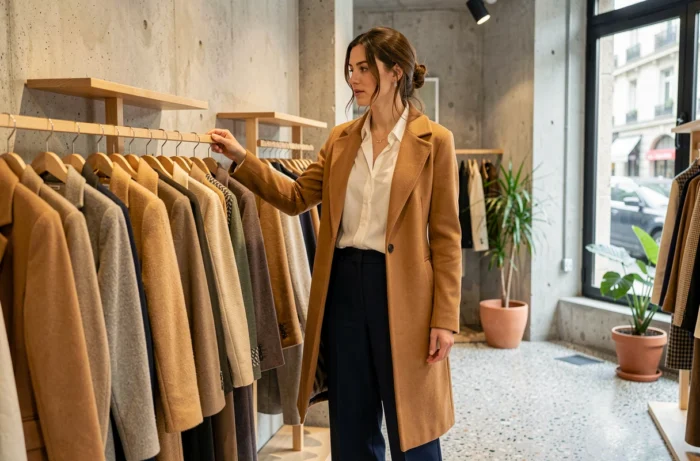
Everyday fashion is based on a simple principle: to assemble pieces that match one’s morphology, lifestyle, and tastes, rather than replicating a look seen on a runway. Exploring fashion methodically means understanding a few basic mechanisms (colors, cuts, materials) and applying them to one’s own wardrobe.
Textile Regulation in France: What Changes for Collection Renewals
Before discussing style, a structural fact deserves to be stated. Law No. 2026-602, enacted on July 8, 2026, now regulates ultra-fast fashion in France. It targets brands that multiply new references without offering incentives for repair.
Since September 1, 2026, contributions from the textile sector are adjusted based on three criteria: the range of collections, the frequency of renewals, and efforts towards repair. In practice, brands that renew their collections very quickly pay more.
This legislation has a concrete effect on how one can explore fashion with Beauty Boo daily: it encourages prioritizing pieces designed to last rather than impulsive purchases dictated by an accelerated trend cycle. The regulatory framework also encourages brands to offer more streamlined ranges, simplifying the choice.

Personal Style and Fashion Trends: Building a Cohesive Wardrobe
Personal style is not an abstract concept. It is the result of sorting: identifying cuts that work for one’s silhouette, spotting colors that enhance one’s complexion, and eliminating what does not meet either of these two criteria.
Starting from One’s Morphology Rather than a Trend
A straight dress suits certain silhouettes, but not all. Wide pants balance a broad bust, while a fitted cut structures a slim silhouette. The current trend (barrel cut, high waist, oversized) is only valid if it adapts to your body.
The reflex to adopt: try on a trendy piece in-store or at home, look at yourself in profile, and decide based on the actual fall. Not based on the lookbook photo.
Identifying Three to Five Basic Colors
A functional everyday wardrobe relies on a limited palette. Three to five colors that combine with each other allow for multiple outfits without multiplying purchases.
- A dark neutral (navy, charcoal, black) to structure the silhouette and serve as a base for everyday looks
- A light neutral (beige, off-white, pearl gray) to lighten and create contrast with dark pieces
- One or two accent colors (terracotta, sage green, burgundy) that add character without imposing a seasonal renewal
A wardrobe of five well-chosen colors generates more combinations than a closet of fifteen mismatched shades. It’s a principle of combinatorics, not an opinion.
Second-Hand and Sustainable Fashion: Not All Circuits Are Equal
Second-hand is often presented as a uniform block. Available data shows that this is not the case. According to a report from Oxfam shared by La Gazette France in September 2026, solidarity shops have an environmental advantage over peer-to-peer resale platforms.
The difference lies in the logistical circuits. A solidarity shop collects, sorts, and resells locally. A resale platform involves individual shipments, often with new packaging and long-distance transport.
For everyday style, this distinction has a practical consequence: thrift shopping in a solidarity shop or physical thrift store gives access to unique pieces, often of better textile quality than entry-level new references. Genuine leather, thick linen, or merino wool is more easily found second-hand than in fast fashion.

Everyday Looks: Assembling Outfits Without Spending an Hour
Everyday fashion only works if it remains quick. The goal is not to compose an editorial look every morning, but to get dressed in a few minutes with a coherent result.
The Clothing Formula Method
A clothing formula is a combination of categories of pieces that you repeat with variations. For example: straight pants + textured top + flat shoes. Or midi dress + short jacket + ankle boots.
Two or three formulas are enough to cover the week. Variation comes from colors, materials, and accessories, not from the structure of the look.
Shoes and Accessories as Style Leverage
Shoes transform the same outfit. A pair of raw jeans with a white t-shirt goes from casual (white sneakers) to structured (leather loafers) without changing clothes.
- A pair of neutral and comfortable shoes for long days (walking, office, errands)
- A bolder pair (color, texture, shape) for occasions where the look needs to convey a message
- A bag sized to fit your actual lifestyle, not a trend (the micro-bag is not suitable if you carry a laptop)
The most useful accessory is the one you actually wear, not the one that stays in the closet because it goes with nothing.
The ban on destroying unsold textiles, effective since July 19, 2026, for large European companies, also changes the available supply. Brands must sell their stocks differently, which feeds clearance channels and private sales of quality pieces at reduced prices. Medium-sized companies will be affected starting in 2030. Monitoring these channels can become a purchasing reflex as relevant as thrift shopping for finding durable pieces to integrate into everyday outfits.