The administrative circular is never the product of a single author. Behind the signature of the minister, the director of central administration, or the prefect, there is a chain of drafting involving distinct professional profiles, each bearing a specific responsibility for the content or form of the text.
Internal lawyers and decision-making support in the creation of circulars
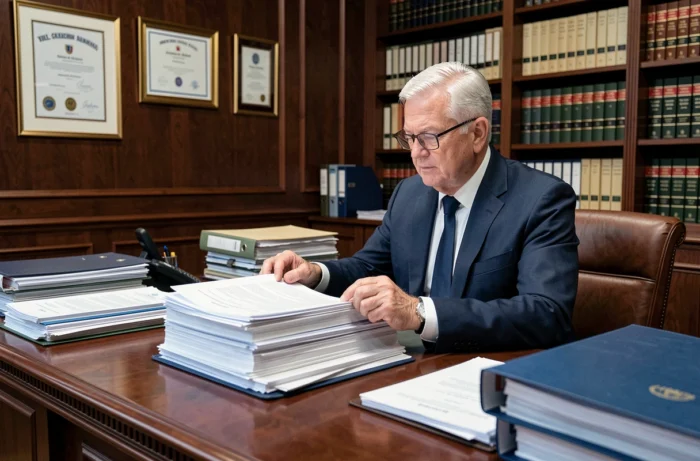
The formal signatory of a circular assumes legal responsibility for it, but rarely drafts the project themselves. This drafting-advisory work is most often carried out by lawyers attached to operational departments. In the departmental direction of territories, for example, positions for lawyers specialized in urban planning or the environment explicitly include legal monitoring, decision-making support, and assistance in administrative drafting among their missions.
Their involvement ensures that the draft circular complies with current legislative and regulatory provisions, particularly those of the urban planning code or the environmental code. They verify that the circular does not exceed its interpretative purpose and does not create new rules, which would make it subject to challenge before the administrative judge.
This role of technical co-author, however, remains absent from most doctrinal notes. Administrative law manuals describe the circular as emanating from an administrative authority, without detailing the professions that create it upstream. In practice, the internal lawyer is the first filter of legality even before the review by the cabinet or the general secretariat.
We observe that the increasing complexity of sectoral law (environment, urban planning, contentious procedure) has reinforced this dependence on the internal lawyer. A circular concerning the implementation of a recent decree regarding the opinions of the environmental commission, for example, requires a technical mastery that only a legal practitioner can provide.
Secretaries and administrative managers: the intermediate drafters of circulars
Reducing the drafting of administrative circulars to only senior officials and lawyers would ignore a crucial operational link. Job offers published by decentralized services and central administrations reveal that administrative secretaries and administrative managers are actually drafting projects for circulars, notes, and regulatory texts on a daily basis.
These profiles work under hierarchical supervision. They do not have signing authority, but they produce the first version of the document, structure the outline, formulate the application provisions, and prepare the formatting in accordance with publication standards.

The professionalization of these roles is reflected in recent job descriptions. The sought-after skills include:
- Mastery of legislative drafting rules (structuring, references to relevant articles of the code, established formulas)
- The ability to articulate the provisions of a decree with the implementation instructions intended for the services
- Knowledge of internal validation circuits, from the operational office to the signature by the competent authority
- Experience with publication tools, particularly online posting on official sites in accordance with decree n° 2008-1281 of December 8, 2008
This decree requires that signed circulars and instructions be posted on the site under the Prime Minister’s authority, under penalty of repeal. The administrative manager preparing the publication thus assumes direct responsibility for the text’s opposability.
Validation circuit and signatories: who engages the responsibility of the circular
The signatory is the only actor who legally binds the administration. Depending on the hierarchical position, this may be a minister, a director of central administration, or a prefect. In practice, the delegation of signature allows deputy directors or heads of office to sign certain sectoral circulars.
The validation circuit before signature varies by ministry, but it follows a constant logic. The operational office produces the draft, the legal service verifies it, the cabinet or the general secretariat arbitrates sensitive points, and the competent authority signs. In inter-ministerial directions, consultation among several services can extend the circuit by several weeks.
The distinction between interpretative circular and imperative circular weighs on this circuit. When the Council of State rules that a circular contains imperative provisions, it becomes an administrative act subject to challenge through the appeal for excess of power. Therefore, the signatory and the upstream drafters must calibrate the vocabulary: a prescriptive formulation transforms an interpretative text into a legal norm.
Role of sectoral departments in drafting circulars in urban planning and environment
The circulars published in the official bulletin of the Ministry of Ecological Transition illustrate the growing specialization of drafting. The general directorates (planning, housing, nature, risk prevention) each produce circulars whose lexical field and regulatory references pertain to distinct codes.
A text related to the procedure for the opinion of the departmental commission on nature involves agents specialized in environmental law. A text on urban planning documents requires agents trained in the urban planning code and its implementing articles. Each sectoral department operates as an autonomous drafting hub, with its own lawyers, its own managers, and its own review circuits.
This siloed organization explains why circulars from the same ministry may exhibit differences in form or style. Harmonization falls to the general secretariat, which intervenes at the end of the chain without always being able to impose a uniform drafting style on very technical texts.

The production chain of an administrative circular thus involves complementary profiles: internal lawyers for compliance, secretaries and administrative managers for operational drafting, sectoral departments for substantive expertise, and signatories for legal commitment. Each link conditions the quality and opposability of the final text.