
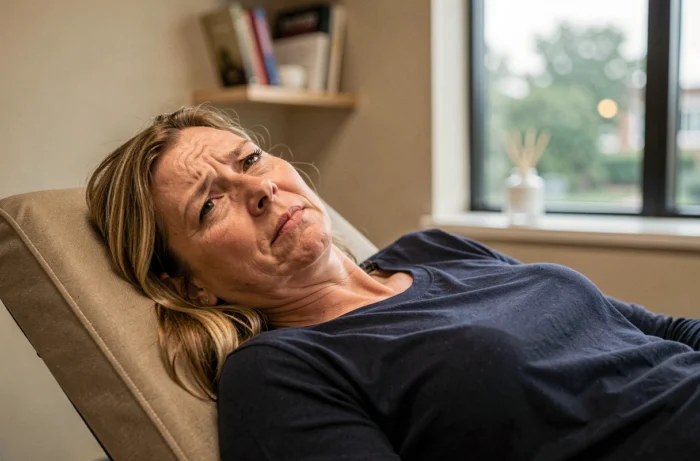
A person consults a sophrologist to manage their stress at work. After a few sessions, they experience unusual anxiety spikes and are unsure if this is normal or if there is a problem with the practice. This type of situation, rarely documented, illustrates the risks of sophrology when the framework is not properly established.
Sophrology is attracting more and more people seeking well-being, from seniors looking for better sleep to children being supported for concentration issues. The method relies on breathing exercises, muscle relaxation, and visualization. It is often presented as safe, but certain limits need to be clearly established.
Sophrology and lack of regulation: a blur that exposes the client
In France, the title of sophrologist is not regulated. There is neither a state diploma, nor a professional order, nor registration in the RPPS (Shared Directory of Health Professionals). In practice, anyone can declare themselves a sophrologist after a few weekends of training or after a course of several hundred hours.
This legal vacuum creates a direct risk: one may encounter a practitioner who is insufficiently trained, unable to identify a contraindication or manage a strong emotional reaction during a session. The quality of care then entirely depends on the individual seriousness of the professional.
To protect against this, it is useful to cross-check several verifications before making an appointment. As detailed in the advice from Soin Et Compassion, the training background and experience of the sophrologist constitute the first reliable filter.
- Check that the practitioner has completed at least 300 hours of training in an organization recognized by a professional federation (Chambre syndicale de la sophrologie, SFS, FEPS).
- Consult the France Compétences directory to see if the claimed certification is still listed, as the status of a certification in the RNCP can evolve and an old mention does not guarantee anything about the current situation.
- Ask if the sophrologist benefits from supervision or an ethical framework, which indicates a commitment to a regulated practice.
- Prefer a practitioner who asks questions about your health and medical history before the first session, rather than someone who jumps straight into the exercises.

Risks of sophrology for psychiatric and traumatic profiles
Sophrology involves introspection, body awareness, and sometimes revisiting memories. For someone suffering from psychiatric disorders (psychosis, severe depression, dissociative disorder) or post-traumatic stress, these exercises can trigger uncontrolled reactions.
A visualization exercise can revive a buried trauma without the sophrologist having the clinical tools to contain the situation. A psychologist or psychiatrist is trained to manage this type of situation, not a standard sophrologist.
Before any session, individuals being treated for a psychiatric illness or with a traumatic history should obtain the opinion of their general practitioner or psychiatrist. This is not a formality: it is a precaution that allows for adapting the practice or, in some cases, temporarily setting it aside.
Cases of children and seniors
Sophrology is increasingly offered to children and seniors. For a child, the difficulty lies in their ability to verbalize discomfort felt during the session. An untrained practitioner in working with younger individuals may miss signs of distress.
In seniors, deep relaxation exercises can cause drops in blood pressure or dizziness, especially if they are on medication. Adapting exercises to the age and health status of the client is not optional; it is a skill that the sophrologist must master.
Sophrology and effectiveness: what science really says
The expert report from Inserm published in December 2020 examined the available studies on sophrology. Its conclusion is clear: the data were too few and too heterogeneous to confirm or exclude the effectiveness of the method. Tolerance and adverse effects had also been insufficiently studied.
This finding does not mean that sophrology is ineffective. It means that the scientific evidence of its effectiveness has not yet been robustly established. The nuance matters, as much online content presents the method as validated by research, which remains premature.
For the client, this implies particular vigilance: if a sophrologist guarantees results regarding stress, sleep, or pain management, they exceed what current data allows us to affirm. A serious practitioner will speak of support and subjective well-being, not healing.
Do not confuse sophrology with medical consultation
A concrete risk arises when sophrology is used as a substitute for medical follow-up. Chronic pain, persistent sleep disorders, or debilitating anxiety require a diagnosis. Delaying a consultation with a doctor thinking that relaxation will suffice can worsen a situation.
Sophrology works best as a complement to a health journey, not as a replacement. Some mutual insurance companies even reimburse sessions, which facilitates this complementary approach, but reimbursement does not equate to medical validation.
Concrete precautions before starting sophrology sessions
Some simple reflexes significantly reduce the risks associated with poor practice.
- During the first contact, check that the sophrologist asks you about your health status, ongoing treatments, and any psychological history.
- Refuse any session where the practitioner asks you to stop a medical treatment or discredits a doctor’s opinion.
- Prefer a setting where sophrology is integrated into a health network (multidisciplinary practice, recommendation from the general practitioner) rather than an isolated practitioner with no ties to the care pathway.
A competent sophrologist knows the limits of their practice and refers to a health professional when the situation requires it. This is probably the most reliable criterion for assessing the seriousness of a practitioner: their ability to say “this is not my area.”